
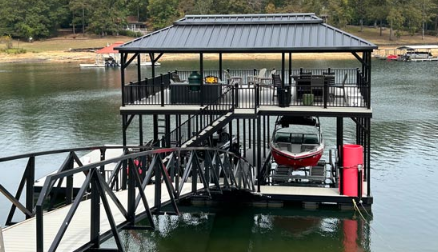
Yes, in a lot of cases aluminum boat docks can stay in the water all winter, and that’s one of the reasons people pick them over wood. Metal doesn’t swell, split, or rot when it freezes and thaws. It just sits there and takes it. But “can” and “should” aren’t always the same thing, so it depends on where you live and what kind of ice your lake gets. A calm pond that skims over with a thin layer is nothing like a big lake where sheets of ice shove around in March. I’ll walk through all of it here, the good and the stuff you need to watch. Most owners are surprised how little winter bothers a well-built dock, honestly.
Why Aluminum Handles Cold So Well
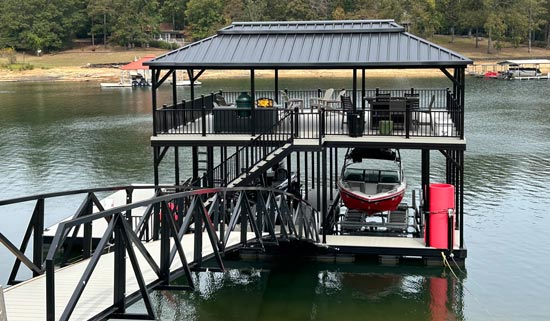
Cold weather wrecks things that soak up water. Wood does it, cheap composites do it a little, and steel does it by rusting. Aluminum doesn’t absorb moisture, so there’s nothing inside the material to freeze, expand and crack things apart. Marine-grade aluminum also stays tough in low temperatures; it doesn’t get brittle the way some plastics do. The powder coat or anodized finish adds a layer of protection against road salt spray, snow, and damp. So you can get through a hard January with the frame in good shape. Freeze-thaw cycles are brutal on a lot of lake gear, but this is where aluminum really earns its price. You’ll still check it in spring, sure, but you’re usually checking for small stuff, not rebuilding.
The Real Winter Enemy Is Moving Ice
Here’s the part to take seriously. It’s not the cold, it’s the ice moving. When a lake freezes solid and then expands, or when wind pushes big sheets around during a thaw, that force can push against pilings, posts and dock legs with serious weight behind it. Wood docks get crushed or pulled apart by this, and so can anything else. Aluminum is lighter, which actually helps in some setups, since floating and lift-style systems can ride up with the ice instead of fighting it. Fixed docks on deep pilings are tougher to protect. Ask your builder how the dock is anchored and whether it’s designed for ice. Some areas get almost none, some get a lot. Know which one you’re in before you decide to leave it out.
Floating, Fixed, and Roll-In: Which Ones Can Stay
Different dock styles handle winter in different ways. Floating aluminum docks often do fine because they move with the water, and in areas with light ice they can stay put. In heavy ice, though, many owners add ice eaters or bubblers to keep the water around the dock from freezing solid. Fixed docks on pilings are solid and stable, but they take the full force of shifting ice, so the pilings need to be set deep and built strong. Roll-in and removable styles are the easy-out option. You just wheel or slide the sections onto shore in the fall and put them back in spring. Honestly, that’s not a bad deal if your lake gets rough. It takes a couple of hours, and you sleep better knowing the dock is safe in your yard.
Preparing the Dock Before the First Freeze
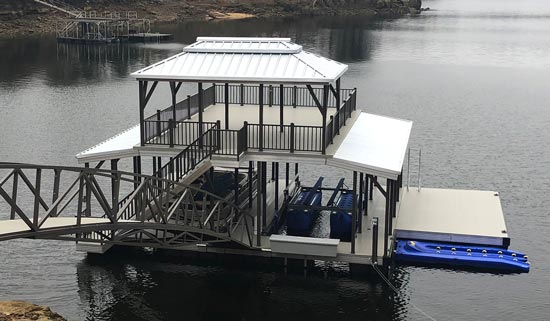
If you’re leaving it in, do a little prep. It takes an afternoon. Rinse the dock off, check every bolt, hinge, and connection, and tighten what’s loose, since winter finds weak spots fast. Look at your anchoring and cables too. Take off anything that doesn’t need to stay, like cushions, lights, ladders, and accessories you can store inside. Remove loose items that could catch wind or snow. If you’re on a lake with heavy ice, think about a bubbler system, and make sure the power setup is safe and rated for outdoor use. Also walk the shoreline connection, because that’s where ice often pushes first. A little work in October is way better than a scramble in April when you find something bent and the season’s already starting.
Adding Comfort Without Adding Winter Risk
Let’s talk about extras, because plenty of people want more than just a straight walkway. Sundeck boat docks, for example, add a wide open platform where you can lounge, cook out, or just sit with a coffee and watch the water. They’re great in summer. The thing to remember is that any extra structure, a bigger deck or a cover, adds surface area for ice and snow to grab or pile on. So if you’re leaving a setup like that in all winter, ask the builder about snow load and ice rating before you buy, not after. Some are designed to stay, some are better pulled or at least partially removed. Good builders will tell you straight. If one doesn’t, that’s a red flag, honestly.
Spring Check and Keeping It Healthy Long Term
When the ice goes out, give the dock a proper look. Walk it slowly. Check for bent sections, loose bolts, shifted pilings, and any spots where the coating got scraped. Aluminum doesn’t rust, but it can pit if the wrong metals touch it, so make sure the hardware is what the manufacturer recommends. Rinse off dirt, salt, and any slime that built up, especially in brackish water. Keep an eye on connection points since those are the weak links, not the frame. If everything looks decent, you’re pretty much ready for the season. That’s honestly the beauty of it. A quick spring checkup beats a full rebuild, and most owners find they spend more time using the dock than fixing it year after year.
So, Leave It In or Pull It Out
For most people with a decent aluminum setup, leaving it in all winter works fine, especially in milder areas or places with light ice. In rough ice country, think about a removable style or good ice protection, and don’t guess about it. Talk to your builder, check local rules, and look at what your lake actually does each winter. That’s the smart move. And talk to a team that builds and installs these every week, not someone reading off a spec sheet. A company like Flotation Systems Aluminum Boat Dock can look at your shoreline and tell you honestly what will make it through. Aluminum is tough, it’s low-fuss, and it gives you more summers and fewer headaches. That’s a pretty good trade.
Frequently Asked Questions
1. Can aluminum docks stay in the water all winter?
In many cases, yes. They don’t rot or swell in the cold, but heavy moving ice is the risk, so check how your dock is anchored and rated.
2. Will ice damage my aluminum dock?
It can if the ice is thick and shifting. Floating systems, deep pilings, and bubblers all help, and removable sections are an easy fix for rough lakes.
3. Do I need to prepare a dock for winter?
A little. Rinse it, tighten bolts and hinges, check anchoring, and take off loose accessories. It takes an afternoon and saves headaches.
4. Are removable aluminum docks worth it?
For harsh winters, yes. Roll-in or sectional docks come out of the water in a couple of hours and go back in easily in spring.
5. Can I leave a sundeck dock all winter?
Sometimes, but extra decking and covers add ice and snow load. Ask your builder about ratings before you decide.